Watts & Bills
Air conditioner vs ceiling fan: the gap is bigger than you think
A split system costs about twelve times what a ceiling fan costs for the same eight hours. The useful part is knowing when the fan is genuinely enough.
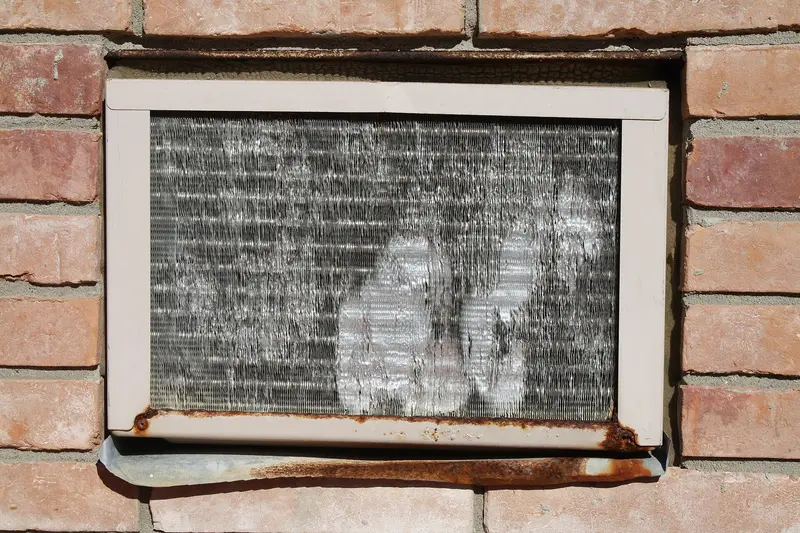
Photo: Air conditioner in brick wall by HumanAdventure, Public domain
Everyone knows the fan is cheaper. Almost nobody knows by how much, which is a shame, because the size of the gap is what makes the decision easy.
Eight hours of cooling, on New South Wales reference rates:
| Split-system air conditioner850W, 8h per day of use | $2.25 per day of use | $270 a year |
| Ceiling fan70W, 8h per day of use | 19c per day of use | $22 a year |
A 2.5kW-cooling split system pulling about 850W costs roughly $2.25 for an eight hour stretch. A ceiling fan at 70W costs about 19 cents for the same eight hours. The fan is around twelve times cheaper, and over a 120-day cooling season that is the difference between about $270 and about $23.
The honest catch
A fan does not cool a room. It moves air across your skin, which makes you feel about three degrees cooler than the thermometer says. That is a genuine and underrated effect - but it only works on people. The fan does nothing for a room that is already 38°C, and nothing at all for a room with nobody in it.
So the comparison above is not quite fair, and the fair version is more useful:
- Under about 30°C, the fan usually wins outright. You get the comfort you wanted for a twelfth of the cost.
- Above about 35°C, the fan is not a substitute. Running it instead of the air conditioner is not thrift, it is just being hot.
- In between, run both. This is the part people miss. A fan lets you set the air conditioner two or three degrees higher for the same comfort, and each degree is worth roughly 5 to 10 per cent off the cooling bill. The fan’s 19 cents buys back considerably more than 19 cents of compressor time.
Where the real money is
If you want to cut a cooling bill, the split system is not the villain - the ducted system is. A whole-house ducted unit draws around 4,200W, which is five times the split system:
| State | Rate | Per day of use | Per year |
|---|---|---|---|
| Tasmania | 27.95c | $9.39 | $845 |
| Queensland (south-east) | 27.97c | $9.40 | $846 |
| Victoria | 28.2c | $9.48 | $853 |
| Northern Territory | 31.68c | $10.64 | $958 |
| New South Wales | 33.14c | $11.14 | $1,002 |
| Western Australia | 33.26c | $11.18 | $1,006 |
| Australian Capital Territory | 36.95c | $12.42 | $1,117 |
| South Australia | 41.91c | $14.08 | $1,267 |
Eight hours of ducted cooling costs over $11 a day in New South Wales and over $14 in South Australia. Ninety of those days runs from $845 in Tasmania to $1,267 in South Australia. Cooling one occupied room with a split system and a fan instead of the whole empty house is, by a distance, the biggest summer saving available to most households.
Assumptions
Figures use flat 2026-27 reference rates and exclude the daily supply charge. Air conditioner draw varies enormously with outside temperature, thermostat setting and how well the room is sealed; 850W is a reasonable average for a 2.5kW-cooling inverter unit doing steady work, not a nameplate maximum. Our full method is here.
Sources
- AER - Default Market Offer 2026-27 final determination
- Reference plan rates by state, 2026-27
- Appliance wattages are typical mid-range values for common Australian models. The label on your own unit beats our figure.
Reference prices last checked 2026-10-26. New regulated prices apply from 1 July each year. Spotted something wrong?Tell us — corrections go out the same week.