Watts & Bills
What a pool pump really costs to run, state by state
A single-speed pool pump on a seven-hour timer draws about 2,800 kWh a year - more than a fridge, a telly and a washing machine put together. Here is the bill in every state.
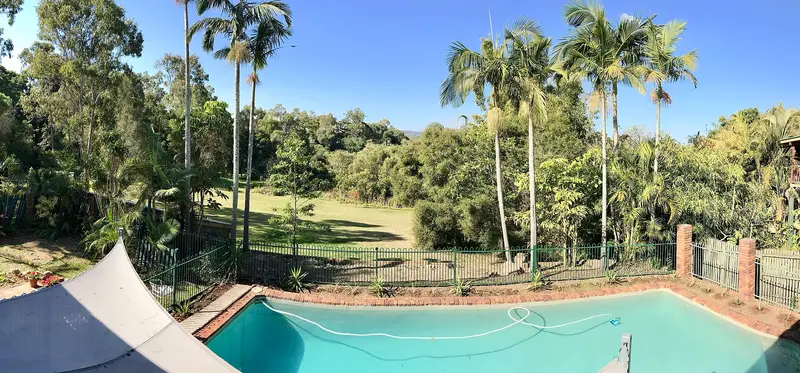
Photo: The backyard and swimming pool of a house in Corinda, Queensland by Kgbo, CC BY-SA 4.0
A swimming pool pump is the quietest expensive thing most Australian households own. It sits in a box by the fence, it makes a noise everyone stopped hearing years ago, and it draws more electricity over a year than the fridge, the television and the washing machine combined.
Here is what a standard single-speed filtration pump costs, at 1,100W on a seven-hour daily timer.
| State | Rate | Per day | Per year |
|---|---|---|---|
| Tasmania | 27.95c | $2.15 | $786 |
| Queensland (south-east) | 27.97c | $2.15 | $786 |
| Victoria | 28.2c | $2.17 | $793 |
| Northern Territory | 31.68c | $2.44 | $890 |
| New South Wales | 33.14c | $2.55 | $931 |
| Western Australia | 33.26c | $2.56 | $935 |
| Australian Capital Territory | 36.95c | $2.85 | $1,038 |
| South Australia | 41.91c | $3.23 | $1,178 |
Why the number is so big
Nothing about a pool pump is dramatic. It is the hours that get you. Seven hours a day, every day, adds up to about 2,800 kilowatt-hours a year - roughly a third of what an average Australian household uses in total.
Put another way: a 2,400W kettle is more than twice as powerful as that pump, but you run the kettle for three minutes and the pump for seven hours. Power is not the bill. Power multiplied by time is the bill.
The three changes that actually move the number
Cut the hours. Most pools are over-filtered. The rule of thumb is one full turnover of the water a day, and a typical domestic pump moves a typical domestic pool in three to four hours, not seven. Halving the timer halves this line of your bill - from about $931 to $465 a year on New South Wales reference rates. It is the only change on this list that costs nothing.
Run it in the sun. If you have solar, the pump is the single best load you own, because it is completely indifferent to when it runs. Shifting the timer to the middle of the day turns electricity you would have exported for a few cents into electricity you do not have to buy at 33c.
Change the pump. A variable-speed pump run slowly for longer moves the same water for a fraction of the energy, because power rises roughly with the cube of speed - run at half speed and you draw closer to an eighth of the power. The replacement is not cheap, but against a $900-a-year line item the arithmetic is not subtle either.
What this table is not
These figures use flat 2026-27 reference rates and ignore the daily supply charge, which you pay regardless. Many pool pumps sit on a controlled-load circuit at a lower rate, and if yours does, your real cost is below the table. And a 1,100W single-speed pump is a middle-of-the-road assumption - check the plate on your own unit, because domestic pumps run from about 600W to over 2,000W.
The method behind every figure is here.
Sources
- AER - Default Market Offer 2026-27 final determination
- Reference plan rates by state, 2026-27
- Appliance wattages are typical mid-range values for common Australian models. The label on your own unit beats our figure.
Reference prices last checked 2026-10-26. New regulated prices apply from 1 July each year. Spotted something wrong?Tell us — corrections go out the same week.