Watts & Bills
What it costs to charge an electric car at home
A 50kWh battery from near-empty costs about $14 on a flat New South Wales tariff - and about a third of that if you charge off your own roof.
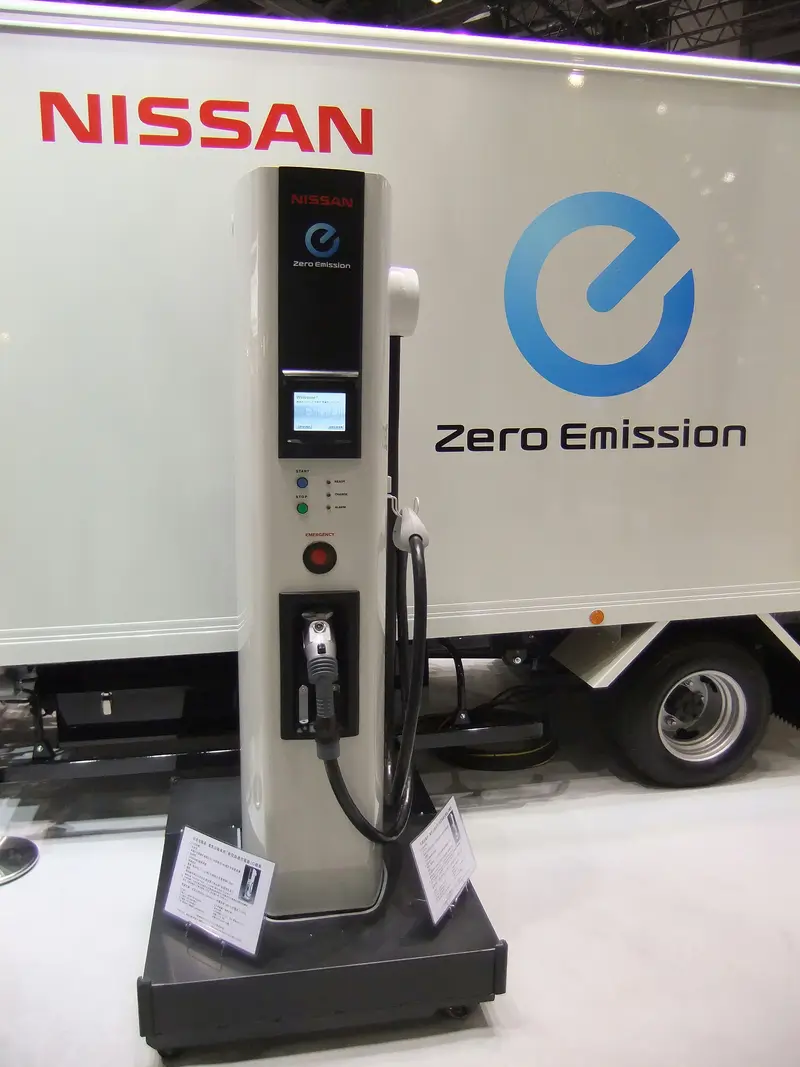
Photo: NISSAN Zero Emission, Electric vehicle charging station by Mj-bird, CC BY-SA 3.0
An electric car is the largest single load most households will ever plug in, and also the one with the widest gap between the worst and best way to do it. The same charge can cost $17 or under $5 depending on nothing but timing.
Start with the straightforward case: a 7kW home wallbox filling a roughly 50kWh battery from near-empty, about six hours.
| State | Rate | Per full charge | Per year |
|---|---|---|---|
| Tasmania | 27.95c | $11.74 | $1,174 |
| Queensland (south-east) | 27.97c | $11.75 | $1,175 |
| Victoria | 28.2c | $11.84 | $1,184 |
| Northern Territory | 31.68c | $13.31 | $1,331 |
| New South Wales | 33.14c | $13.92 | $1,392 |
| Western Australia | 33.26c | $13.97 | $1,397 |
| Australian Capital Territory | 36.95c | $15.52 | $1,552 |
| South Australia | 41.91c | $17.60 | $1,760 |
The number that matters is cents per kilometre
Dollars per charge is hard to compare against anything. Dollars per 100km is not.
A 50kWh battery is good for roughly 350km in a typical mid-sized electric car, so on New South Wales reference rates a full charge works out around $4.00 per 100km. In Tasmania it is about $3.35; in South Australia about $5.00.
A petrol car doing 8L/100km at $2.00 a litre costs $16.00 per 100km. Even on the dearest electricity in the country, charging at home on a flat rate is roughly a third of the fuel cost - and that is before the comparison gets lopsided.
Where it gets lopsided
Charging off your own solar. A kilowatt-hour you generated costs you the feed in tariff you gave up, not the retail rate you avoided - typically 3 to 7 cents rather than 28 to 42. A full charge drops to about $2.50, or roughly 70 cents per 100km. This is the single biggest reason an EV and a solar array belong together.
Charging on an off-peak or EV tariff. Most retailers now sell a dedicated overnight window, often in the 8 to 15c range. That roughly halves the figures in the table above without buying anything.
Charging on a public fast charger. The opposite. Public DC rates commonly run from 50c to over 80c per kilowatt-hour, which puts a 50kWh charge at $25 to $40 - more per 100km than petrol in some cases. Fast charging is a convenience you buy on a road trip, not a way to run a car.
The practical shape of it
For a household doing 15,000km a year in an electric car:
- Flat retail rate at home: roughly $600 a year.
- Overnight EV tariff: roughly $250 a year.
- Mostly off your own roof: roughly $120 a year.
- The petrol car it replaced: roughly $2,400 a year.
The spread between the best and worst home option is larger than most people’s entire annual saving from any other efficiency measure, and it is bought entirely with a timer setting.
Assumptions
We model a 7kW single-phase wallbox at full draw for six hours, which is about 42kWh delivered - a realistic near-empty-to-full charge for a 50kWh battery including charging losses. Range per charge varies hugely with the car, the weather and the driving; 350km is a mid-sized sedan figure, not a promise. Figures use flat 2026-27 reference rates and exclude the daily supply charge, and assume no off-peak tariff unless stated. Method here.
Sources
- AER - Default Market Offer 2026-27 final determination
- Reference plan rates by state, 2026-27
- Appliance wattages are typical mid-range values for common Australian models. The label on your own unit beats our figure.
Reference prices last checked 2026-10-26. New regulated prices apply from 1 July each year. Spotted something wrong?Tell us — corrections go out the same week.