Watts & Bills
The daily supply charge: what you pay before you switch anything on
Every state charges you a fixed daily fee for being connected. In Queensland it is $701 a year before a single light goes on - triple the Northern Territory.
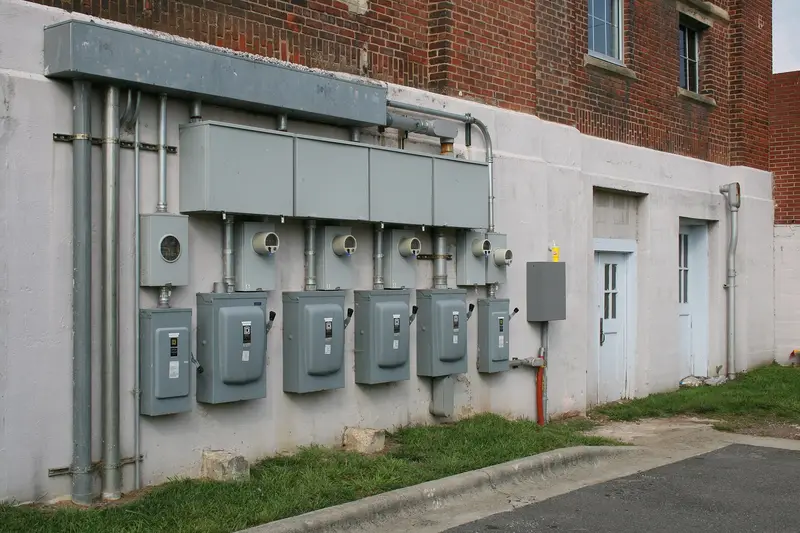
Photo: 2008-07-26 Electrical meters and switches in Durham by Ildar Sagdejev (Specious), CC BY-SA 4.0
There are two numbers on an electricity bill. Almost all the attention goes to the first one - cents per kilowatt-hour, the bit that rewards you for turning things off. The second one is the daily supply charge, and it does not care what you do.
It pays for the poles, wires and meter that connect your house to the grid. You pay it for every day you hold a connection, at the same rate whether you ran a ducted air conditioner all month or were overseas the whole time.
Here is what that fixed fee costs a year, on 2026-27 reference prices:
| State | Supply charge | Per year |
|---|---|---|
| Queensland (south-east) | 192.02c/day | $701 |
| New South Wales | 166.23c/day | $607 |
| Tasmania | 167.68c/day | $612 |
| South Australia | 180.05c/day | $657 |
| Australian Capital Territory | 134.2c/day | $490 |
| Victoria | 126.74c/day | $463 |
| Western Australia | 119.24c/day | $435 |
| Northern Territory | 62.45c/day | $228 |
A south-east Queensland household pays over three times what a Northern Territory household pays for the privilege of being plugged in - $473 a year apart, before either of them uses any electricity at all.
Why this matters more than it looks
It makes the headline rate misleading. Queensland has one of the cheapest usage rates in the country at 27.97c/kWh and one of the dearest supply charges. South Australia is dear on both. Compare two plans on cents per kilowatt-hour alone and you can comfortably pick the worse one - a plan 2c cheaper per kWh is only better if you use enough to out-earn a higher daily fee. For a household using 4,000 kWh a year, 2c/kWh is worth $80; a supply charge 30c/day higher costs $110.
It flattens the reward for using less. If your bill is $1,900 a year and $607 of it is fixed, then halving every single thing you use does not halve your bill - it cuts it by about 34 per cent. This is the arithmetic behind the complaint that efficiency measures “never show up on the bill”. They do. They just only ever work on part of it.
It is why going solar rarely reaches zero. Solar reduces the kilowatt-hours you buy. It does nothing to the supply charge. A household that generates everything it uses still owes $435 to $701 a year unless it disconnects entirely.
What you can actually do about it
Not much directly - and that is worth knowing, because it stops you wasting effort. The charge is set per network area, and you cannot shop for a different network without moving house.
What you can do:
- Compare plans on total annual cost, not on the rate. Every retailer must publish an estimated annual cost for your usage level. That figure includes the supply charge; the advertised rate does not.
- Check you are not on two connections. Granny flats, sheds and old subdivisions sometimes carry a second meter nobody uses. That is a second supply charge, paid annually, for nothing.
- Know your break-even before switching. Work out your annual kilowatt-hours,
then compare
(rate × kWh) + (supply × 365)for each plan. It takes two minutes and it is the only comparison that is actually true.
Assumptions
Charges are 2026-27 reference prices for the network shown in our price basis - Ausgrid for New South Wales, Energex for south-east Queensland, the five-zone average for Victoria. Several states hold multiple network areas with different fixed charges, so your own bill is the authority on what you pay. All figures include GST.
Sources
- AER - Default Market Offer 2026-27 final determination
- Reference plan rates by state, 2026-27
- Appliance wattages are typical mid-range values for common Australian models. The label on your own unit beats our figure.
Reference prices last checked 2026-10-26. New regulated prices apply from 1 July each year. Spotted something wrong?Tell us — corrections go out the same week.